Registrar vs Humanist Ceremonies in Scotland
One of the questions I hear most often from couples at the very beginning of their planning journey is: “What kind of ceremony should we have?” And more specifically, “What’s actually the difference between a registrar and a humanist ceremony?”
Having planned weddings all over Scotland, I’ve seen both done beautifully. I’ve stood at the back of the room during registrar ceremonies that were warm, emotional, and full of personality, and I’ve watched humanist ceremonies that felt so perfectly aligned with a couple that guests were hanging on every word.
So if both can feel personal… what really sets them apart?
This article isn’t about pushing you in one direction or another. It’s about sharing what I see in real weddings, so you can choose the ceremony that feels right for you.
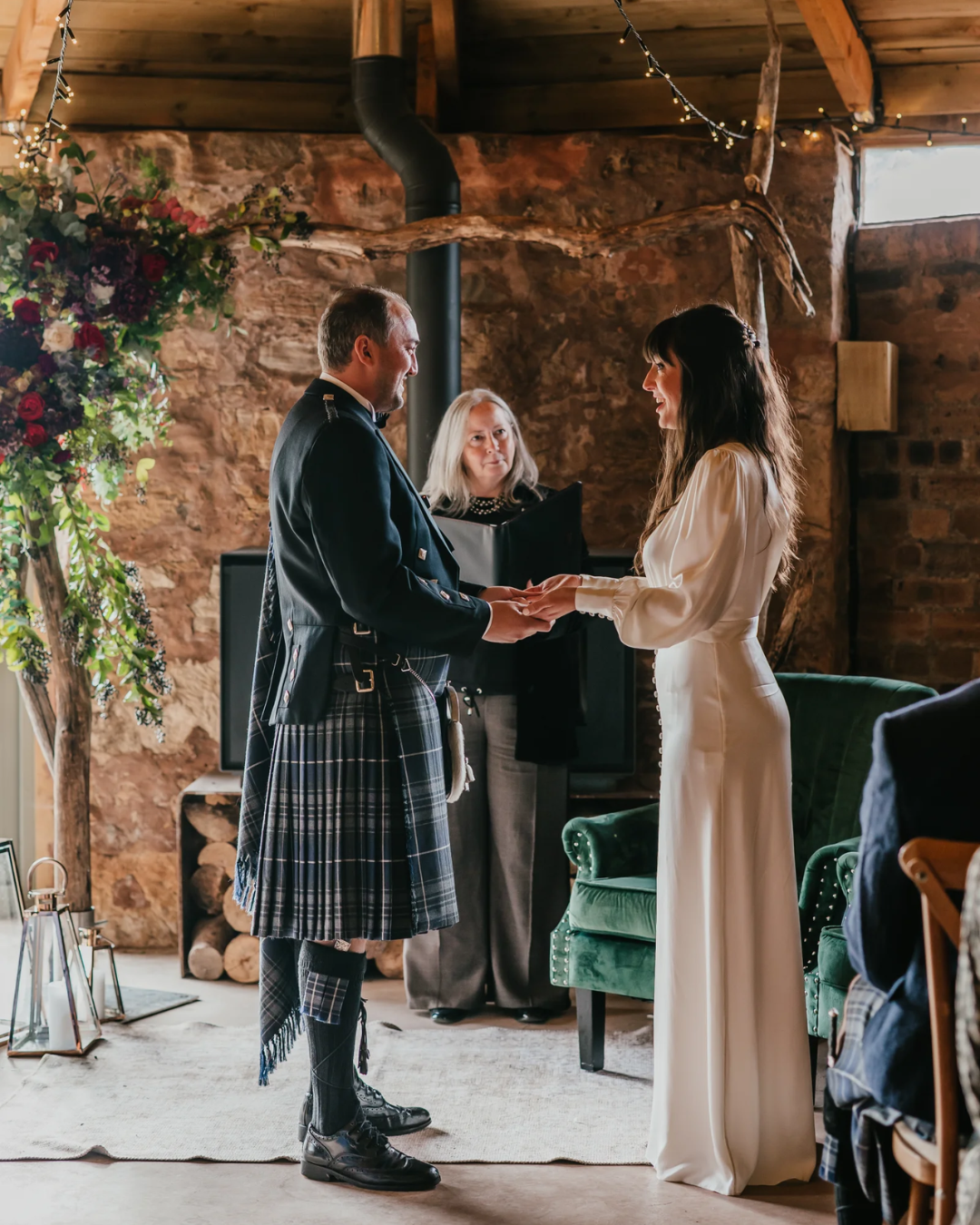
Registrar Ceremonies
A district registrar conducts registrar ceremonies as part of the local authority’s legal responsibilities. They are civil, non-religious ceremonies — and in my experience, they are often far more personal than couples expect.
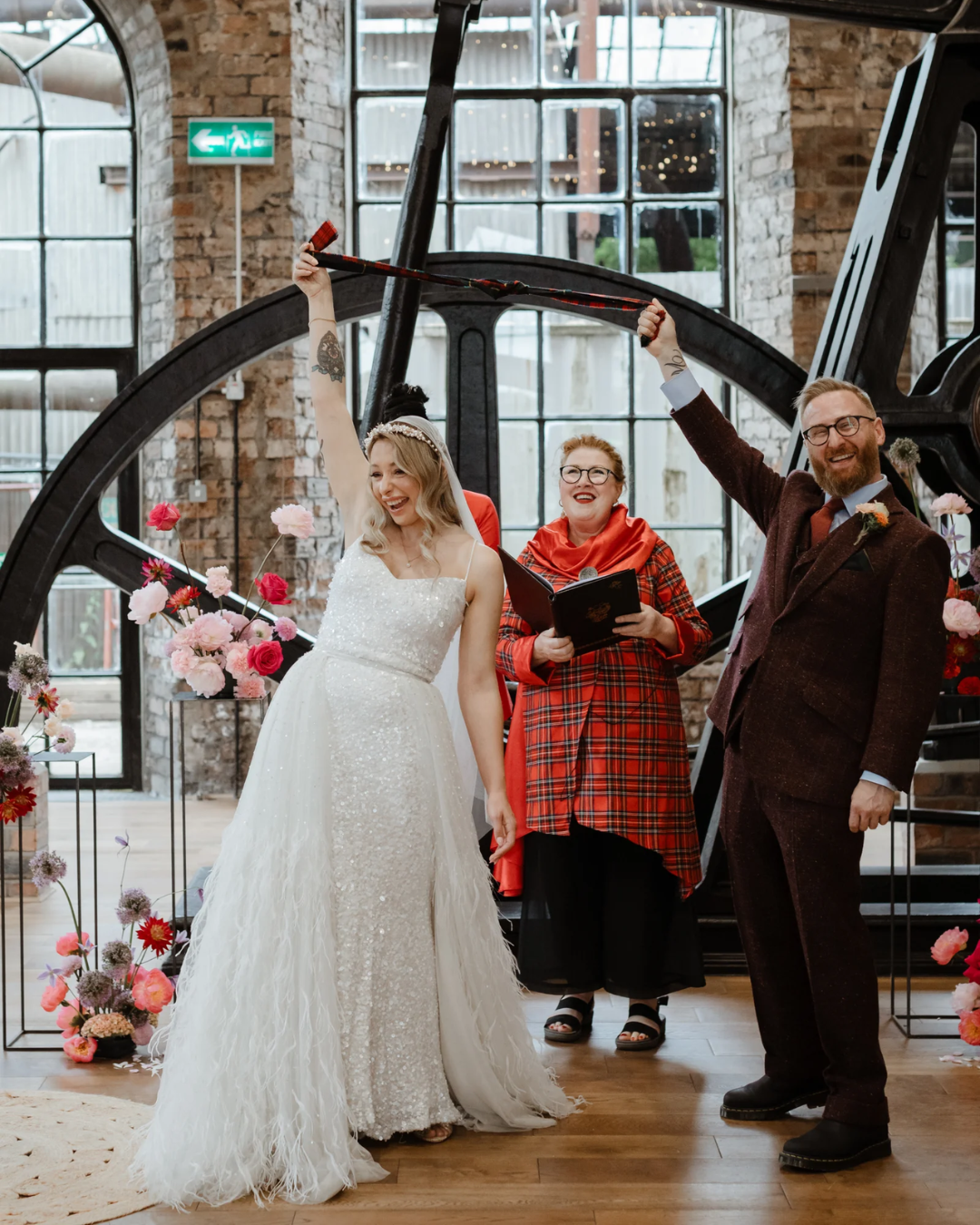
A registrar ceremony follows a legally prescribed framework. Within that structure, there is usually room to add personal touches. Over the years, I’ve seen registrars welcome personal vows, meaningful readings, symbolic gestures such as handfasting or quaich and even thoughtful involvement from family members or the wedding party.
You can hold these ceremonies in a register office or at a venue licensed for civil ceremonies. This means location choice is more limited, and outdoor or private settings are only possible if the venue holds the appropriate licence. From a budget point of view, registrar ceremonies are generally the more affordable option. Fees vary depending on the council, the day of the week, and the venue, but they are usually lower than those of a humanist celebrant.
When everything aligns — the right registrar, clear communication, and realistic expectations — registrar ceremonies can be elegant, heartfelt, and genuinely meaningful. The main thing to be aware of is that flexibility can vary from one council (and one registrar) to another, which means the experience isn’t always entirely predictable.
Humanist Ceremonies
A registered humanist celebrant conducts humanist ceremonies, which are fully legal in Scotland. Like registrar ceremonies, they are non-religious — but the way they are created is quite different.
Humanist ceremonies begin with the couple. The celebrant takes time to get to know you — how you met, what matters to you, and what makes your relationship yours. From there, the ceremony is written entirely from scratch. Rather than adding personal elements to a fixed structure, the structure itself is shaped around your story. Legal wording is woven seamlessly into the narrative, which often results in a ceremony that feels fluid, cohesive, and deeply personal from beginning to end.
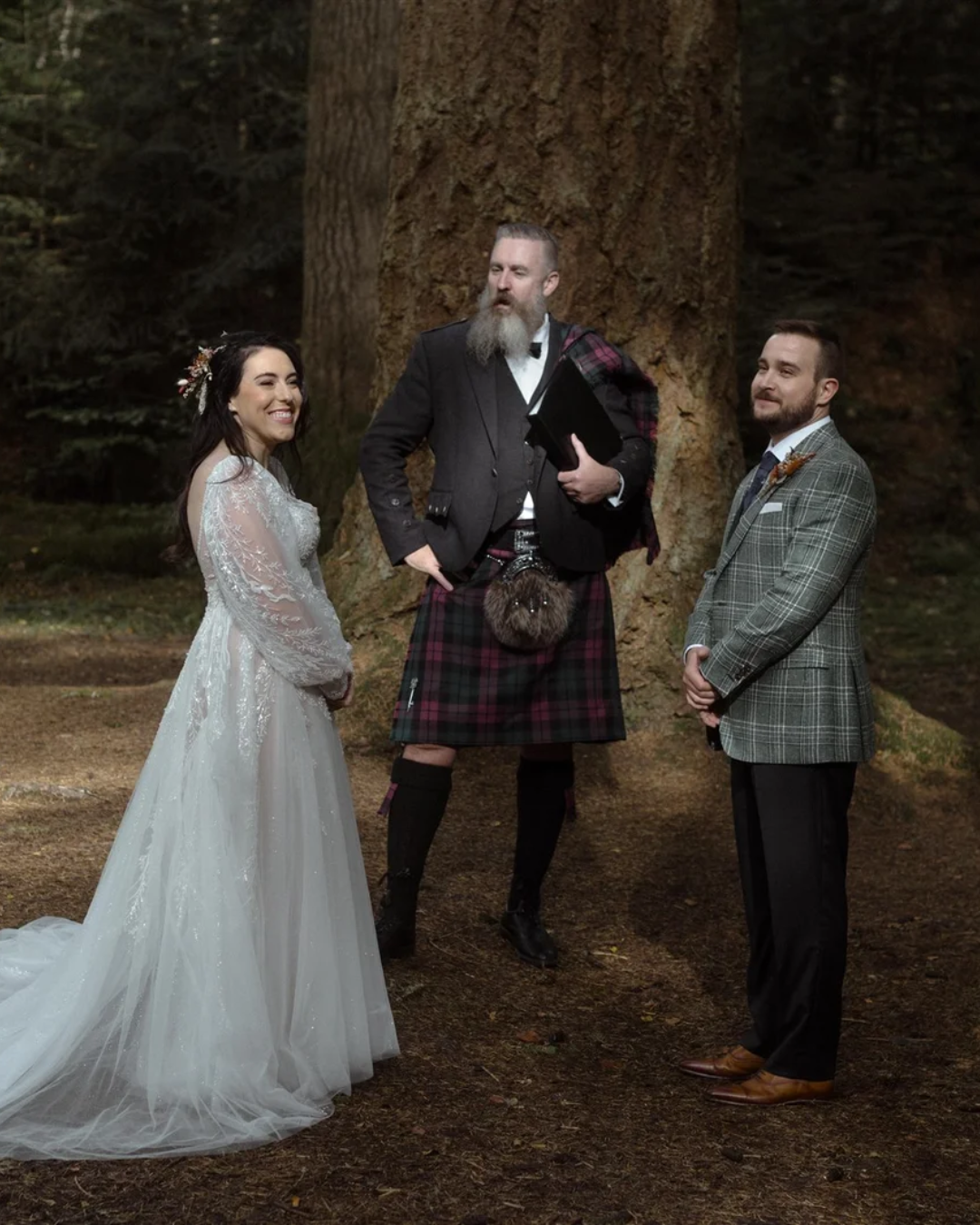
One of the biggest draws of a humanist ceremony is freedom of location. Ceremonies can take place almost anywhere in Scotland: indoors or outdoors, in private homes, gardens, forests, beaches, or non-licensed venues. If you’re dreaming of a ceremony that feels completely connected to a place, this flexibility can be incredibly appealing.
From a budget perspective, this option is typically more expensive than a registrar ceremony. Celebrant fees vary, but they usually include multiple planning meetings, the writing of a bespoke ceremony, and often rehearsal support. Couples are investing not just in the legal act of marriage, but in time, creativity, and emotional depth.
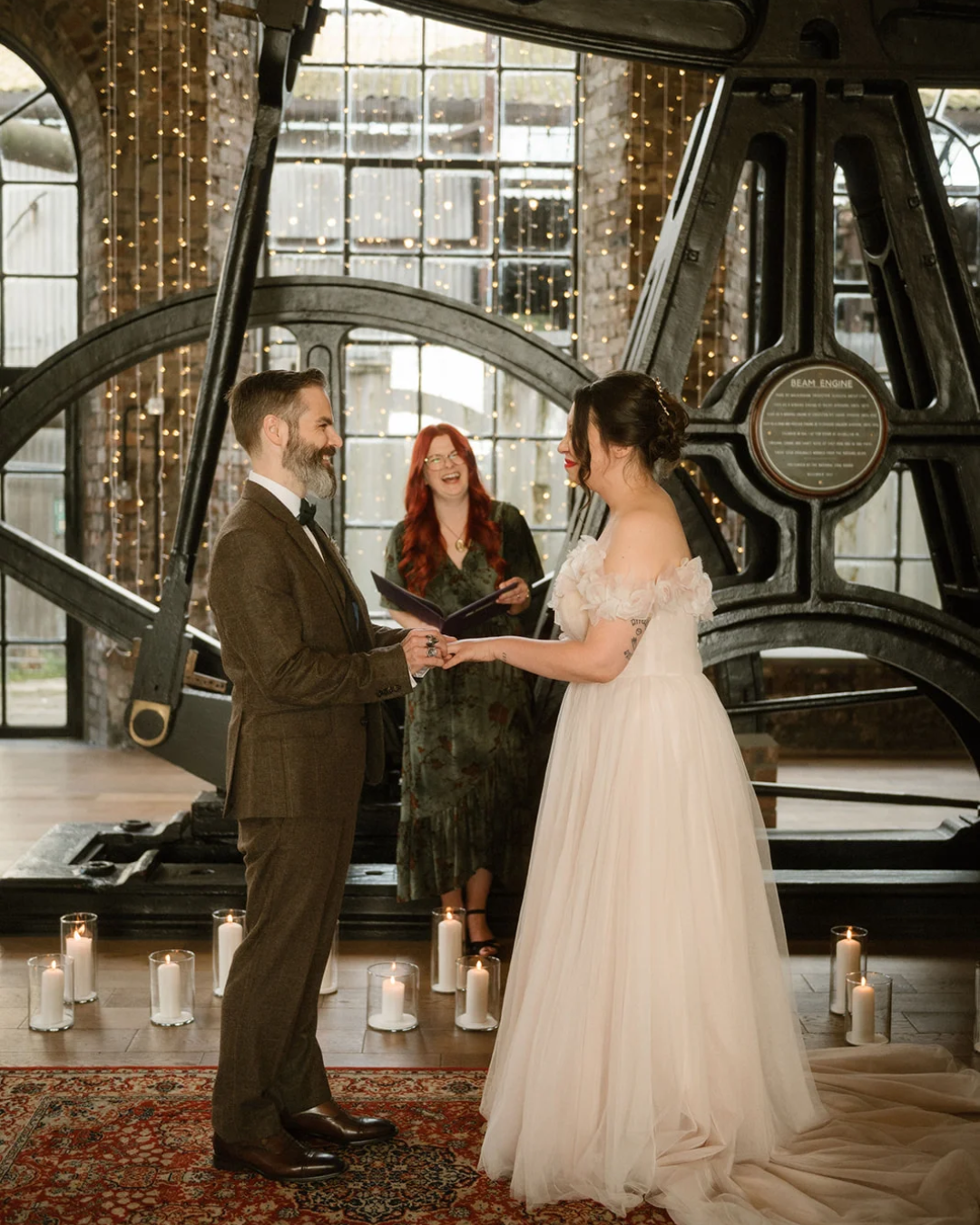
Myths vs Reality
Myth: Registrar ceremonies are impersonal and rigid
Reality: I’ve witnessed registrar ceremonies that were just as emotional and personal as humanist ones, with vows, gestures, and meaningful family involvement.
Myth: Humanist ceremonies are the only way to personalise your wedding ceremony
Reality: The difference isn’t how personal the ceremony can be, but how that personalisation is created.
Myth: All registrar ceremonies are the same
Reality: Flexibility varies by council and registrar, which means experiences can differ widely across Scotland.
The Real Difference (In a Nutshell)
Both registrar and humanist ceremonies in Scotland can be warm, meaningful, and deeply personal. The true difference lies in the starting point. Registrar ceremonies are legal ceremonies first, with personalisation added within an approved framework. Humanist ceremonies are designed entirely around the couple, with the legal element woven naturally into their story.
Neither is better — they’re simply different. And knowing how they differ makes choosing between them much easier.
Ceremony Duration: What to Expect
Another question couples often ask me is how long each type of ceremony actually lasts. While this might seem like a small detail, it can have a real impact on the flow of your wedding day — from guest experience to photography timings.
Registrar ceremonies are usually quite structured, which means their duration is fairly predictable. Most registrar ceremonies last around 20 to 30 minutes, depending on how many personal elements are included.
When personal vows, readings, or symbolic gestures are added, the ceremony can feel rich and meaningful while still remaining concise. This makes registrar ceremonies a good option for couples who like a clear structure and a well-paced, efficient ceremony that fits neatly into the day.
Humanist ceremonies tend to be a little longer, simply because they are story-driven and built entirely around the couple. On average, a humanist ceremony lasts around 30 to 45 minutes, though this can vary depending on the depth of storytelling, number of readings, and any rituals you choose to include.
In my experience, these ceremonies rarely feel long. Because guests are hearing about your journey, your values, and your connection, the time passes naturally — and often emotionally.
Which Ceremony Is Right for You?
When I help couples navigate this decision, I always encourage them to think less about labels and more about how they want their ceremony to feel.
If you value structure, simplicity, and a more streamlined approach, a registrar ceremony may be the perfect fit. If creative ownership, location freedom, and storytelling are high on your list, a humanist ceremony might feel more aligned.
Both can be beautiful. Both can be meaningful. The key is choosing the one that reflects you.
If you’d like to talk this through together, you can get in touch to book your free consultation — I’d love to hear your story and help you explore what would suit you best.
And if you’re right at the start of your planning journey, you might also find it helpful to read my blog post on where to begin once you’re engaged — it’s a gentle, practical guide to those very first steps.